



Blog
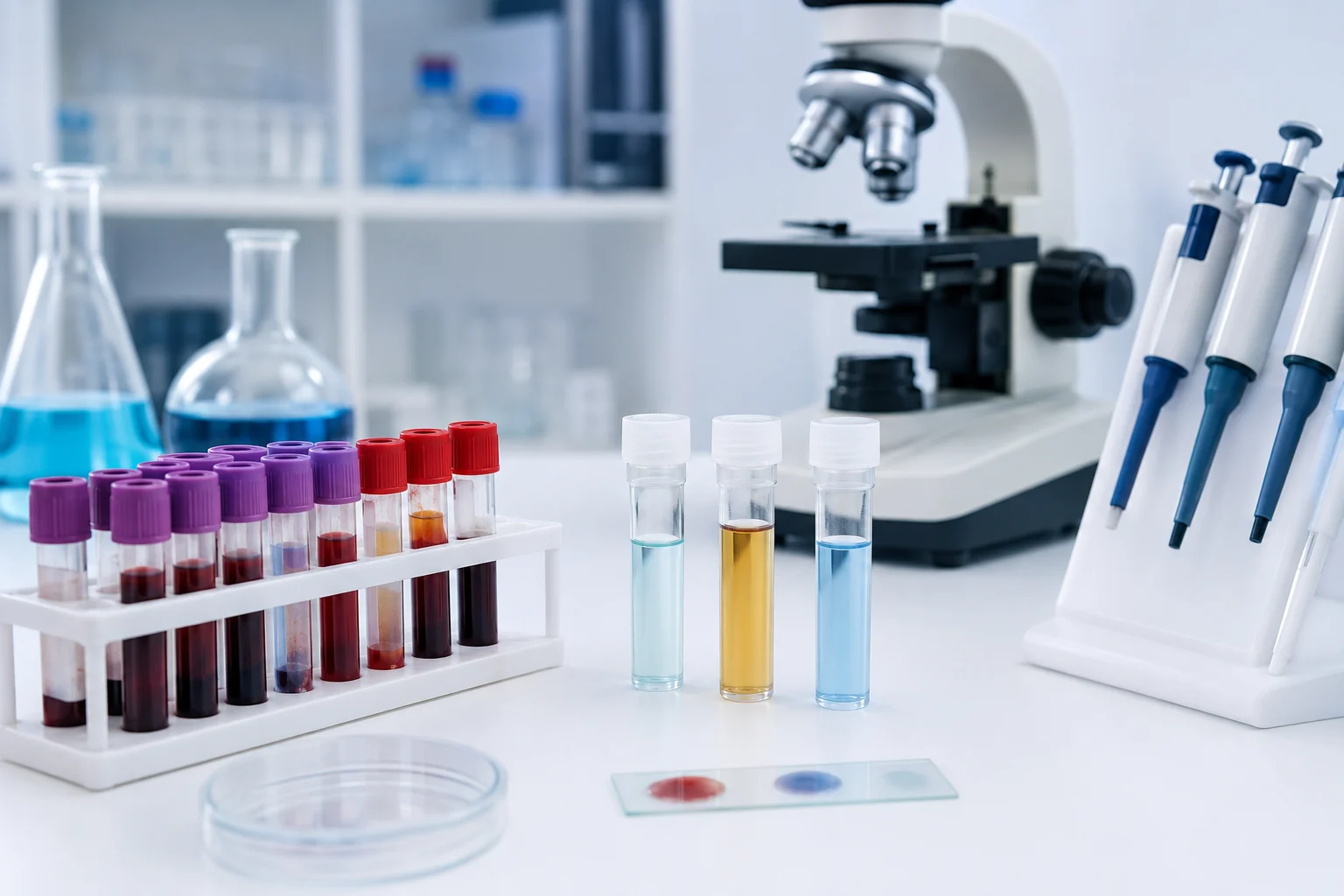
Understanding Common Diagnostic Tests: What CBC, LFT, and KFT Tell You - A BMLT, DMLT, and M.Sc. MLT Perspective
Walk into any diagnostic laboratory in India today, and you will find three tests requested more often than almost any other: the Complete Blood Count, the Liver Function Test, and the Kidney Function Test. At Haldia Institute of Health Sciences (HIHS), our BMLT, DMLT, and M.Sc. MLT students spend a great deal of time learning not just how these tests are performed, but why doctors reach for them so consistently. For patients, though, these reports often arrive as a confusing page of abbreviations and numbers with little explanation. This blog breaks down what each test actually measures, why it matters, and what it can reveal about the body long before symptoms become obvious.
The Complete Blood Count: A Window into Overall Health
A Complete Blood Count, almost universally shortened to CBC, is often the very first test a doctor orders, regardless of what symptoms a patient presents with. Blood touches every organ in the body, so changes in its composition can hint at problems occurring almost anywhere. The test measures red blood cells, white blood cells, platelets, haemoglobin, and haematocrit, along with several derived indices describing the size and quality of these cells.
A low red blood cell count or reduced haemoglobin typically points towards anaemia, a condition remarkably common across India and often linked to nutritional deficiencies. An elevated white blood cell count usually signals that the body is fighting an infection or dealing with inflammation, while an unusually low count can suggest the immune system itself is compromised. Platelet counts are equally telling, since they govern the blood's ability to clot; abnormalities here can indicate anything from a viral infection like dengue to more serious clotting disorders. Because it offers such a broad snapshot in a single test, the CBC remains the starting point for almost every diagnostic journey.
The Liver Function Test: Checking the Body's Chemical Factory
The liver performs hundreds of essential functions, from processing nutrients and producing proteins to filtering toxins out of the bloodstream. A Liver Function Test, commonly known as LFT, is a panel of measurements designed to assess how well this organ is coping with its workload.
Two enzymes, ALT and AST, sit at the heart of this panel. When liver cells are damaged - whether by viral hepatitis, fatty liver disease, or excessive alcohol consumption - these enzymes leak into the bloodstream and their levels rise. Bilirubin, another key marker, is a yellow pigment produced when old red blood cells break down; when the liver cannot process it efficiently, bilirubin accumulates and causes the yellowing of skin and eyes known as jaundice. The panel also includes albumin and total protein, reflecting the liver's capacity to synthesise proteins, and alkaline phosphatase, which can point towards issues in the bile ducts. Doctors frequently order an LFT for patients experiencing fatigue, abdominal discomfort, or unexplained jaundice, and it is also used routinely to monitor patients on long-term medication that could affect liver function.
The Kidney Function Test: Monitoring the Body's Filtration System
The kidneys quietly filter waste products out of the blood around the clock, and problems here often develop silently for years before any symptoms appear. A Kidney Function Test - sometimes called a Renal Function Test, with KFT and RFT used interchangeably - is designed to catch this kind of silent decline early.
Creatinine and urea are the two waste products most closely watched in this panel, since both accumulate in the blood when the kidneys are not filtering efficiently. From these values, laboratories calculate the estimated Glomerular Filtration Rate, or eGFR, which offers a clearer picture of kidney function and is used to stage chronic kidney disease when necessary. The test also measures electrolytes such as sodium and potassium, which the kidneys are responsible for balancing; disturbances here can cause symptoms ranging from muscle weakness to irregular heart rhythms. People living with diabetes or high blood pressure - both of which place considerable strain on the kidneys over time - are typically advised to have this test done at regular intervals, even without obvious symptoms.
Why These Three Tests Are Often Ordered Together
It is no coincidence that CBC, LFT, and KFT are frequently bundled into a single annual health check-up package. Together, they cover three of the body's most vital systems: the blood that circulates through every organ, the liver that processes everything we consume, and the kidneys that filter it all clean again. Each of these systems can deteriorate gradually and painlessly for years, which is precisely why relying on symptoms alone is a risky strategy. A single blood draw, interpreted correctly, can reveal early warning signs that allow a doctor to intervene long before a condition becomes serious or irreversible.
The Professionals Behind the Report
Behind every diagnostic report lies the careful work of medical laboratory technologists - professionals who draw samples, operate sophisticated analysers, and ensure results are accurate before they ever reach a doctor's desk. This is demanding, detail-oriented work that combines scientific knowledge with a genuine sense of responsibility, since even small errors can lead to significant misdiagnosis.
At HIHS, this is exactly what our BMLT (Bachelor in Medical Laboratory Technology) programme trains students to do - from mastering haematology and biochemistry fundamentals to running the very panels discussed in this blog. For those looking for a shorter, hands-on entry into the field, our DMLT (Diploma in Medical Laboratory Technology) offers a faster route into diagnostic lab careers. For graduates who wish to progress further, our M.Sc. MLT (Master of Science in Medical Laboratory Technology) builds on this foundation with advanced training in clinical biochemistry, molecular diagnostics, and quality control, preparing students for senior technologist roles, teaching positions, and supervisory responsibilities within diagnostic laboratories. As diagnostic testing becomes more central to preventive healthcare across India, the professionals who make this possible play an increasingly important role in the healthcare system - often working behind the scenes without receiving much public recognition for the precision their work demands.
Frequently Asked Questions
What is the difference between BMLT, DMLT, and M.Sc. MLT?
BMLT is a full undergraduate degree with broad foundational training, DMLT is a shorter diploma for quicker entry into lab careers, and M.Sc. MLT is a postgraduate programme for those seeking advanced expertise and leadership roles in diagnostic laboratories.
What eligibility is needed for these courses at HIHS?
Candidates for BMLT and DMLT generally need higher secondary education with science subjects, while M.Sc. MLT typically requires a relevant undergraduate degree; exact criteria can vary by admission cycle.
What career options open up after BMLT, DMLT, or M.Sc. MLT?
Graduates typically work as lab technologists in diagnostic centres, hospitals, and pathology labs, with BMLT and M.Sc. MLT offers access to more senior and supervisory roles, and M.Sc. MLT additionally opens doors to teaching and research positions.
How often should CBC, LFT, and KFT be done for routine health check-ups?
Annually for healthy adults, though doctors often recommend twice a year for those with diabetes, hypertension, or related risk factors.
What makes M.Sc. MLT different from working directly after BMLT?
M.Sc. MLT deepens technical expertise in specialised diagnostic areas and prepares graduates for leadership, teaching, or research roles that typically require training beyond an undergraduate degree.
Contact Us
For those interested in learning more about diagnostic testing, laboratory sciences, or the broader field of allied health, the team at HIHS is happy to help. Do reach out to us with any questions you may have, and we will be glad to guide you further.

