



Blog
Best M.Sc. in Immuno Haematology & Blood Banking Course in West Bengal - 2026 Guide
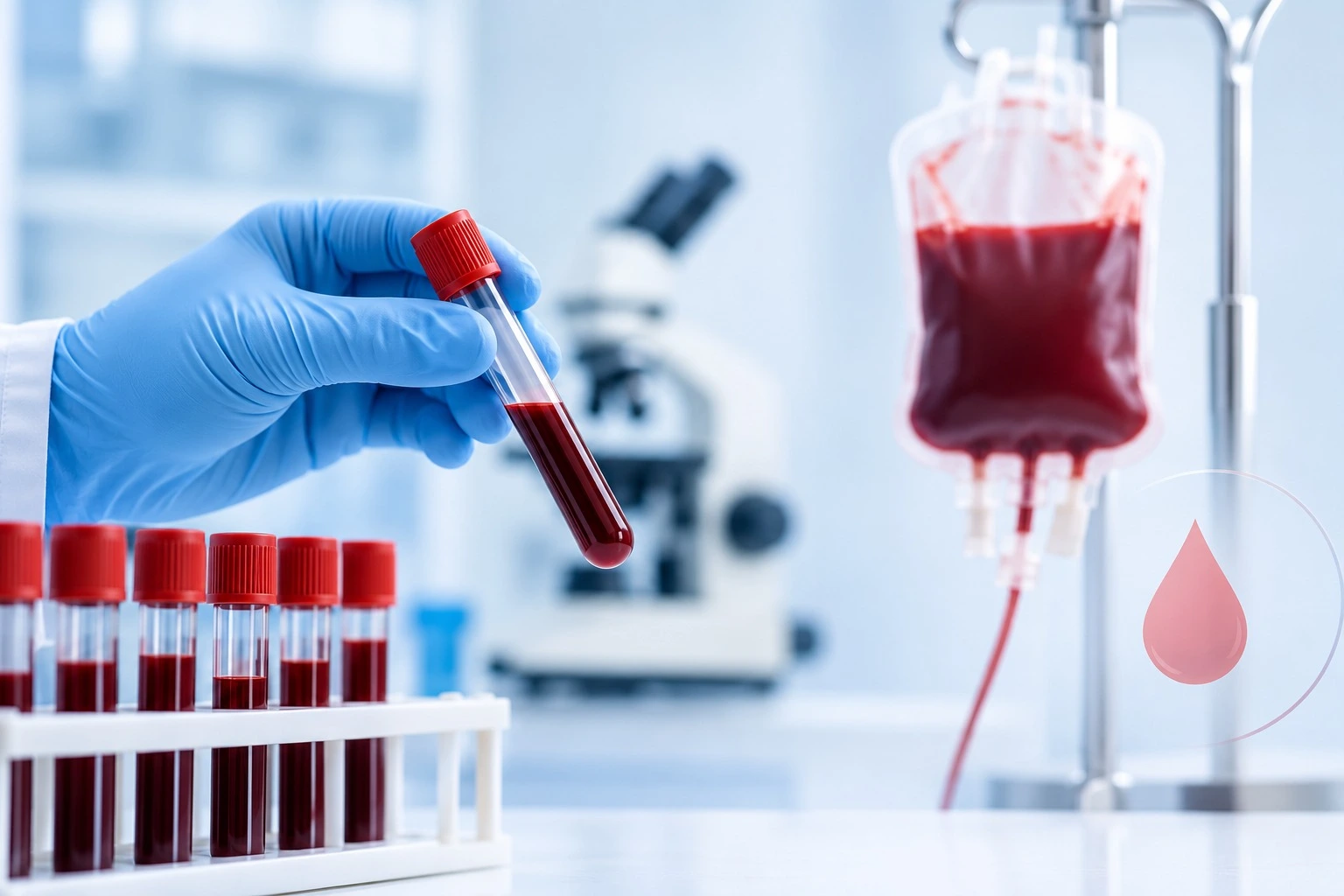
Every unit of blood that reaches a patient in an emergency ward, an operating theatre or a cancer unit has passed through the hands of a trained laboratory professional. Long before a transfusion begins, someone has typed the blood group, screened the donor, cross-matched the sample and confirmed that the match is safe. This quiet but life-saving work is the heart of immuno haematology and blood banking, and it is one of the most dependable specialisations within medical laboratory science.
For graduates who want to move beyond routine pathology and build expertise in transfusion medicine, the M.Sc. in Laboratory Technology (Immuno Haematology & Blood Banking) at Haldia Institute of Health Sciences (HIHS) is a focused and career-oriented postgraduate option. This guide explains the course, its eligibility rules, the admission route, the syllabus and the career paths that open up after completion.
Why Immuno Haematology and Blood Banking Matter in Modern Healthcare
Blood transfusion is among the most common medical procedures in the world, and it is also one of the most sensitive. A single error in grouping or compatibility testing can have serious consequences for a patient. That is why hospitals and blood banks depend on technologists who understand not only the techniques but also the science of antigens, antibodies and immune responses behind them.
Immuno haematology is the discipline that studies these immune reactions in blood. It helps laboratories identify blood groups, detect unexpected antibodies, investigate transfusion reactions and support safe care for patients with conditions such as anaemia, trauma, surgical bleeding and obstetric emergencies. Blood banking, in turn, covers the entire chain, from donor selection and collection to component separation, storage, testing and issue.
As hospitals expand their critical care, cancer care and surgical services, the demand for qualified blood bank technologists continues to rise. A postgraduate qualification in this field places a graduate in a strong position to take on responsibility, supervise teams and contribute to quality and safety standards.
Course Overview: M.Sc. in Laboratory Technology (Immuno Haematology & Blood Banking)
The M.Sc. in Laboratory Technology with a specialisation in Immuno Haematology & Blood Banking is a postgraduate programme offered by the Department of Medical Laboratory Technology at HIHS Haldia. It is designed to take a graduate with a laboratory background and develop advanced theoretical knowledge, practical competence and research awareness in transfusion science.
The programme has an intake capacity of 30 students. This small cohort size allows closer academic guidance, better access to laboratory facilities and more meaningful interaction between students and faculty, which matters greatly in a hands-on discipline such as this.
Eligibility Criteria
Applicants must hold a Bachelor of Medical Laboratory Technology or a B.Sc. in Medical Laboratory Technology from a recognised university. This requirement ensures that every student entering the course already has a grounding in laboratory practice, so that the postgraduate years can be devoted to advanced and specialised learning.
Admission Process Through JEMAS-PG
Admission to the course is through the JEMAS-PG entrance examination, which is conducted by the West Bengal Joint Entrance Examination Board. Candidates should keep a close watch on the official notifications for application dates, examination schedules and counselling procedures, and prepare their documents well in advance. For help with admission queries, prospective students can contact the HIHS admission team directly.
What You Will Study: Syllabus Highlights
The curriculum blends core medical laboratory subjects with advanced topics in transfusion science, so that students are comfortable with the entire diagnostic landscape and not only with blood banking alone.
Foundation and Diagnostic Subjects
Students build a strong base in the core medical laboratory disciplines, along with essential skills in laboratory instrumentation, communication and computer applications. Research methodology and biostatistics prepare them to read and evaluate scientific studies, which is valuable for anyone planning an academic or research career.
Specialised Blood Banking Subjects
The specialised portion covers serology, transfusion practice, immunohaematology, molecular biology and genetics, blood component preparation and transfusion therapy. Students also learn the legal and regulatory aspects of blood banking, along with recent advances in techniques, so their knowledge stays current with modern practice.
Skills You Will Develop
Beyond subject knowledge, the programme aims to build the professional abilities that employers look for in a senior technologist. Students learn to perform accurate blood grouping and compatibility testing, to interpret serological findings and to separate blood into its components for targeted therapy. They also learn to follow quality control and documentation practices, to understand the legal and ethical framework around donation and transfusion, and to work calmly when a clinical team needs results urgently.
Equally important is the scientific mindset that comes with postgraduate study. Training in research methodology and biostatistics helps students question results, analyse data and communicate findings clearly, which are skills that serve them in hospitals, laboratories and research institutions alike.
Career Scope After M.Sc. in Immuno Haematology & Blood Banking
This specialisation leads to a wide range of professional paths, in both clinical and academic settings. Some of the most promising options are described below.
Hospitals, Blood Banks and Diagnostic Centres
Graduates can work as a Chief Medical Laboratory Technologist or a Senior Medical Laboratory Technologist in the blood bank departments of central and state government hospitals, reputed private hospitals, standalone blood banks and diagnostic centres. These are leadership-level roles that carry responsibility for testing, supervision and compliance.
Starting Your Own Laboratory
With the right experience, a graduate can set up an independent diagnostic centre or pathological laboratory. The combination of advanced laboratory knowledge and an understanding of quality systems gives an entrepreneur a solid foundation for running a trustworthy and well-managed facility.
Teaching in Allied Health Institutions
Those who enjoy teaching can join an allied health science institute or a Medical Laboratory Technology college as an Assistant Professor. As the number of paramedical programmes grows across the country, qualified faculty with a postgraduate specialisation are increasingly valued.
Research Careers
After qualifying the NET or an equivalent examination, graduates can work as a Junior Research Fellow or a Research Associate in government-sponsored research projects at prestigious institutions. This route suits students who are curious about the science behind transfusion medicine and wish to contribute to new discoveries.
Research Institutes and Pharmaceutical Companies
There is also a strong opportunity for skilled immuno haematology and blood banking technologists in research institutes focused on haematology and blood transfusion, as well as in pharmaceutical companies working in related areas.
Who Is This Course Right For?
This programme suits graduates who enjoy precision, take pride in accuracy and are motivated by work that directly protects patients. If you are fascinated by how blood groups, antibodies and immune responses interact, and you want to turn that curiosity into a respected professional role, this specialisation is a natural next step after your bachelor's degree.
It also suits students who see themselves in leadership, teaching or research. Because the syllabus combines advanced laboratory science with research methodology and legal awareness, it prepares graduates for supervisory positions, academic careers and scientific projects, and not only for bench-level testing. Students who plan ahead, build strong practical habits during their studies and stay updated with developments in transfusion medicine will find themselves well placed in a field where trust and competence are valued above everything else.
Why Choose HIHS Haldia for Your Postgraduate Studies
Haldia Institute of Health Sciences was established in 2003 by the Indian Centre for Advancement of Research and Education (ICARE), and it has since grown into a respected name among paramedical and allied health colleges in West Bengal. The institute offers a wide spectrum of programmes across medical laboratory technology, radiology, physiotherapy, nutrition, operation theatre technology and hospital administration, which creates a rich and collaborative academic environment.
The Department of Medical Laboratory Technology offers a progressive pathway, from diploma and bachelor-level programmes to M.Sc. specialisations, so students can continue their growth within one institution. Being part of the wider ICARE group also places students close to a strong healthcare ecosystem in Haldia, which supports practical learning and professional exposure. For students who are searching for a top paramedical college in West Bengal, HIHS offers a combination of focused programmes, experienced faculty and a supportive campus.
Frequently Asked Questions
1. Who can apply for the M.Sc. in Laboratory Technology (Immuno Haematology & Blood Banking) at HIHS Haldia?
Graduates with a Bachelor of Medical Laboratory Technology or a B.Sc. in Medical Laboratory Technology from a recognised university are eligible to apply.
2. How many seats are available in the programme?
The course has an intake capacity of 30 students.
3. Which entrance examination is required for admission?
Admission is through the JEMAS-PG entrance examination conducted by the West Bengal Joint Entrance Examination Board.
4. What jobs can I get after completing this course?
You can work as a Chief or Senior Medical Laboratory Technologist in blood banks and hospitals, start your own laboratory, teach as an Assistant Professor, or pursue research roles and opportunities in pharmaceutical companies.
5. Can I pursue research after this M.Sc.?
Yes. After qualifying the NET or an equivalent examination, you can apply for Junior Research Fellow and Research Associate positions in government-sponsored research projects.
Contact Us
If you are ready to build a specialised career in transfusion science, now is the time to take the next step. To learn more about admissions, fees and the application process for the M.Sc. in Laboratory Technology (Immuno Haematology & Blood Banking), reach out to the admission team at Haldia Institute of Health Sciences.

