



Blog
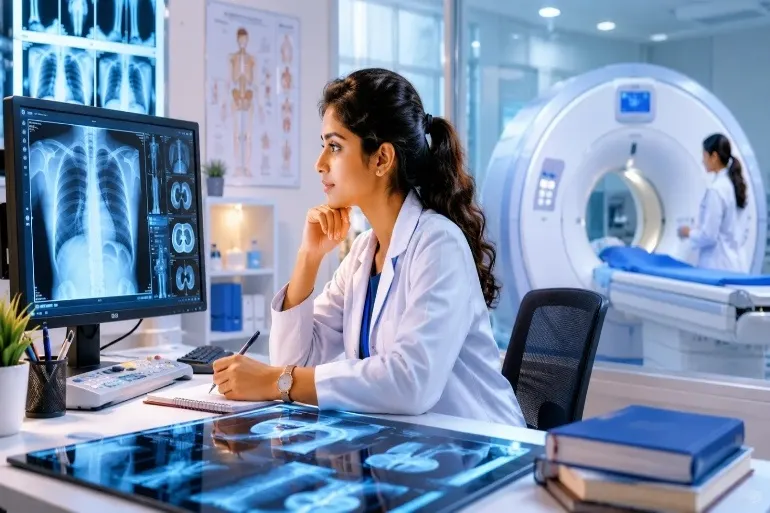
DRD Course 2026 - Your Complete Guide to the Diploma in Radiography (Diagnostic) at Haldia Institute of Health Sciences
DRD Course 2026 - Your Complete Guide to the Diploma in Radiography (Diagnostic) at Haldia Institute of Health Sciences
Healthcare in India is expanding rapidly, and diagnostic imaging sits at the very centre of this growth. Every hospital, nursing home, and diagnostic centre depends on trained imaging professionals to operate X-ray machines, CT scanners, MRI systems, and ultrasound equipment. Without accurate diagnostic images, early detection of fractures, tumours, infections, and organ abnormalities would be nearly impossible. For students who have completed 10+2 with science subjects and are looking for a focused, career-ready healthcare program, the Diploma in Radiography (Diagnostic) - DRD - is one of the most practical and rewarding choices available today.
The DRD course at Haldia Institute of Health Sciences (HIHS), Haldia, West Bengal, is a 2-year diploma program followed by a 6-month internship, approved by the State Medical Faculty of West Bengal (SMFWB). It trains students to become skilled radiography professionals through a blend of theoretical study, imaging science, and hands-on clinical exposure, preparing them for immediate employment in hospitals and diagnostic centres upon graduation.
Why Choose the DRD Course After 10+2?
The DRD course is designed for students who want to enter the healthcare workforce quickly without compromising the quality of their training. It is shorter than a degree program and directly employment-oriented - employers across the sector value DRD graduates precisely because they arrive with focused, hands-on imaging skills from day one. Radiography suits students who enjoy working at the intersection of technology and patient care. Every image a radiographer captures plays a direct role in a patient's diagnosis and treatment, making the profession both technically engaging and deeply meaningful.
Eligibility Criteria
Candidates must have passed the 10+2 or equivalent examination from a recognised board with Physics, Chemistry, and Biology as core subjects, each passed separately, and a minimum of 50% aggregate marks. Students awaiting their final results may also apply, subject to meeting the criteria upon declaration.
Admission Process
Admission to the DRD course at HIHS is conducted through centralised counseling by the State Medical Faculty of West Bengal (SMFWB), ensuring a transparent, merit-based selection process. Interested students can visit hihshaldia.in or contact the admissions office for guidance on documentation and application timelines.
Course Duration and Structure
The DRD is a 2.5-year program - two years of academic study followed by a six-month compulsory internship in affiliated hospitals and diagnostic centres. The curriculum covers Human Anatomy, Radiological Physics, Radiographic Techniques, X-ray room setup, and advanced modalities including CT, MRI, and Ultrasonography (USG). The internship provides immersive, supervised clinical experience in real radiology departments, ensuring students are genuinely job-ready upon completion.
Course overview
The Diploma in Radiography (Diagnostic) - DRD is a 2.5-year paramedical program offered at Haldia Institute of Health Sciences, approved by the State Medical Faculty of West Bengal (SMFWB). Designed for students who have completed 10+2 with Physics, Chemistry, and Biology (minimum 50% aggregate), the course trains students in diagnostic imaging technologies including X-ray, CT, MRI, and Ultrasonography. The curriculum covers Human Anatomy, Radiological Physics, Radiographic Techniques, and X-ray room setup, followed by a 6-month compulsory internship in affiliated hospitals. With an intake of just 6 seats per batch, graduates are equipped to work as imaging technicians in government and private hospitals, diagnostic centres, and nursing homes - or set up their own radiological diagnostic centre.
Career Opportunities After DRD
The career outlook for DRD graduates is strong and growing. After completing the course, graduates can work as X-ray Technicians, CT Scan Technicians, USG Technicians, and MRI Assistants in Central and State Government hospitals, private multispecialty hospitals, standalone diagnostic imaging centres, nursing homes, and trauma care units. Government health departments regularly recruit qualified radiographers for district hospitals and public health programmes, and the SMFWB-recognised DRD credential from HIHS is accepted for these positions. Entrepreneurially inclined graduates can also set up their own radiological diagnostic centre, serving communities where imaging services are currently underserved.
Future Scope
The future of diagnostic radiography in India is shaped by a growing healthcare sector and rapid technological advancement. As digital imaging, PACS systems, and AI-assisted diagnostics become standard, the role of the radiographer is evolving and expanding. DRD graduates who wish to advance further can pursue B.Sc. in Radiology and Imaging Technology (B.Sc. RIT) or postgraduate certifications in medical imaging, making the DRD a strong foundation for a long-term career in healthcare.
Why Haldia Institute of Health Sciences?
Established in 2003 by ICARE, Haldia Institute of Health Sciences is one of West Bengal's most respected paramedical institutions. For the DRD program, HIHS offers an SMFWB-approved curriculum, experienced clinical faculty, modern imaging labs, and meaningful internship placements in affiliated hospitals. The batch size of just six students ensures personalised attention and maximum hands-on time with imaging equipment - a clear advantage over larger, more crowded programmes. Graduates from HIHS's paramedical programmes are placed in hospitals and diagnostic centres across West Bengal and beyond.
Conclusion
The Diploma in Radiography (Diagnostic) - DRD is a smart, focused, and future-ready healthcare qualification. It combines scientific knowledge with hands-on clinical practice, preparing graduates not just for examinations but for effective performance in real hospital environments. For students in West Bengal seeking a recognised, career-oriented paramedical program with strong job prospects, the DRD course at Haldia Institute of Health Sciences offers the right balance of quality education, clinical exposure, and institutional credibility.
Frequently Asked Questions (FAQs)
1. What is the total duration of the DRD course at HIHS?
The DRD is a 2.5-year program comprising two years of academic study and a six-month compulsory internship in affiliated hospitals and diagnostic centres.
2. What are the eligibility criteria for DRD admission?
Candidates must have passed 10+2 with Physics, Chemistry, and Biology, each subject passed separately, with a minimum 50% aggregate.
3. How is admission conducted?
Admission is through centralised counseling by the State Medical Faculty of West Bengal (SMFWB), based on merit and seat availability.
4. What jobs are available after completing the DRD course?
Graduates can work as X-ray, CT, USG, or MRI Technicians in government hospitals, private hospitals, diagnostic centres, and nursing homes, or set up their own radiological diagnostic centre.
5. Can I pursue higher studies after DRD?
Yes. Graduates can pursue B.Sc. RIT, advanced diplomas in specific imaging modalities, or postgraduate certifications in medical imaging technology.
Contact Us
If you are interested in pursuing the Diploma in Radiography (Diagnostic) - DRD and would like to know more about admissions, eligibility, course structure, or clinical training, we warmly invite you to get in touch with us at Haldia Institute of Health Sciences. Our admissions team is available to answer your queries, guide you through the SMFWB counseling process, and help you take the first step towards a rewarding career in diagnostic imaging. You can reach us, we look forward to welcoming you to the HIHS family.

