



Blog
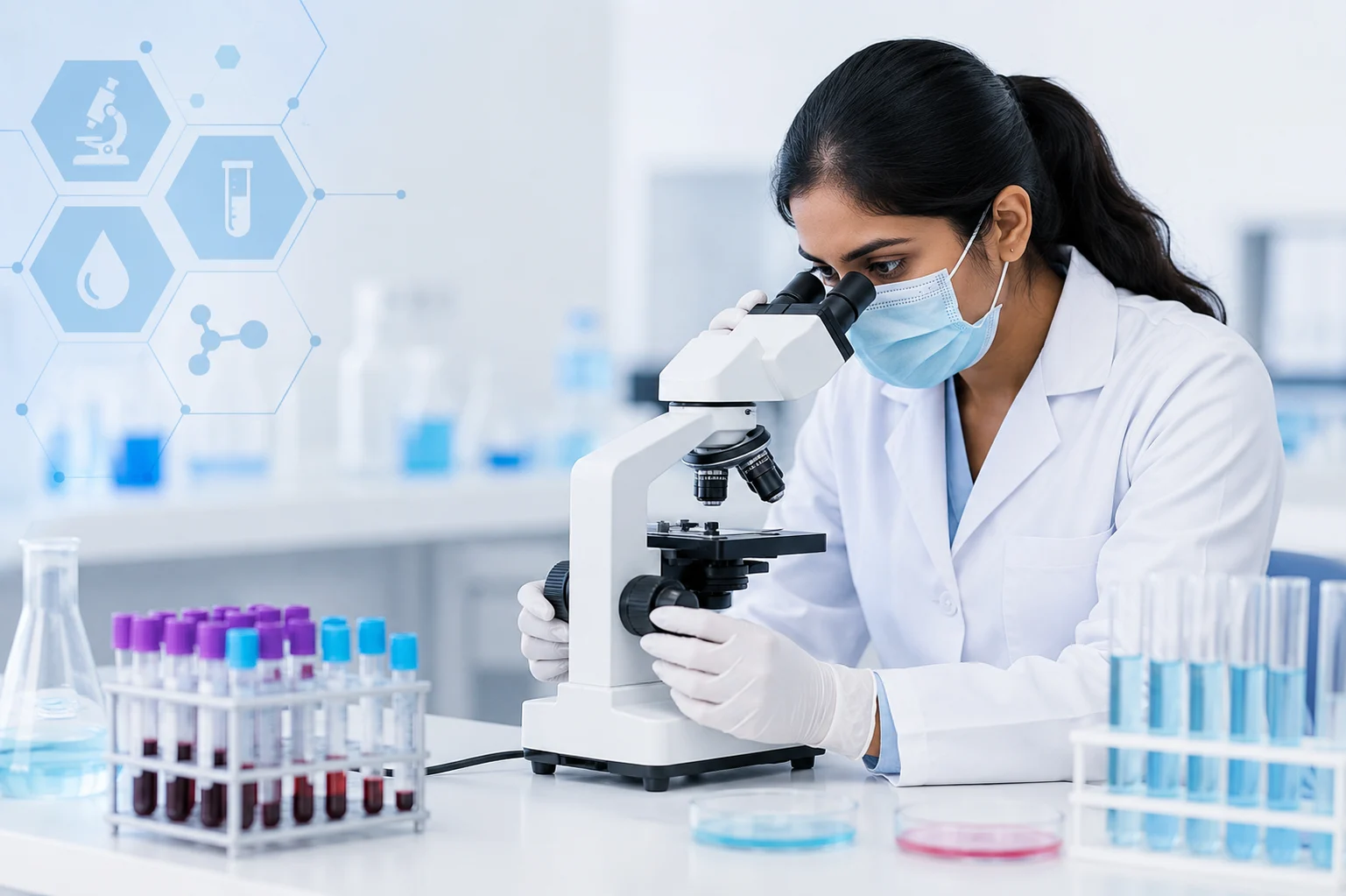
DMLT Course 2026 – Diploma in Medical Laboratory Technology | Haldia Institute
In today's rapidly advancing world of healthcare, the demand for skilled laboratory professionals has never been higher. The Diploma in Medical Laboratory Technology (DMLT) offered at Haldia Institute of Health Sciences is a specialized allied health science program that equips students with the knowledge and practical expertise required to perform critical laboratory investigations. These investigations form the backbone of modern medicine - enabling accurate diagnosis, effective treatment, and the prevention of disease.
Whether you are a science student looking to step into a fulfilling healthcare career or a professional seeking to formalize your skills, DMLT offers an excellent foundation in the field of clinical and diagnostic laboratory science.
What is DMLT?
DMLT stands for Diploma in Medical Laboratory Technology. It is a branch of medical science focused on the laboratory-based investigation of biological specimens such as blood, urine, tissues, and other bodily fluids. The program trains students to operate specialized equipment, conduct diagnostic tests, and interpret laboratory findings - all of which are essential in supporting physicians and clinicians in making informed medical decisions.
Medical laboratory technologists are an indispensable part of the healthcare system. They work quietly behind the scenes, yet their contributions directly impact patient outcomes. From detecting infections to monitoring chronic illnesses and identifying cancers at early stages, the work of a laboratory technologist is both critical and life-saving.
The Road to Becoming an MLT :
The DMLT program is a 2.5-year course that includes a 6-month mandatory internship. The curriculum is thoughtfully designed to give students a blend of theoretical understanding and hands-on clinical experience.
The DMLT is a 2.5-year program split into three phases.The program covers foundational subjects such as anatomy, physiology, and biochemistry through classroom instruction and laboratory training, complemented by hands-on clinical practice at affiliated healthcare facilities. Graduates complete an internship and competency-based assessments, equipping them with the skills and readiness demanded by the healthcare workforce.
What It Takes to Get In :
To be eligible for the DMLT program, candidates must meet the following academic requirements:
Must have passed 10+2 or an equivalent examination from a recognized board.
Subjects studied must include Physics, Chemistry, and Biology as separate subjects.
A minimum aggregate score of 50% in the qualifying examination is required.
Admissions are merit-based, conducted through counseling organized by the state Medical Faculty of West Bengal.
What You'll Learn :
The DMLT curriculum covers all key areas of laboratory medicine. Students study Human Anatomy & Physiology as a foundation, followed by Clinical Biochemistry to understand disease-related chemical imbalances. Clinical Pathology and Histopathology & Cytopathology train students in diagnosing diseases through tissue, organ, and cell analysis. Clinical Microbiology focuses on identifying infection-causing organisms, while Haematology covers blood disorders and CBC analysis. Blood Bank Technology teaches blood grouping, cross-matching, and transfusion practices. Laboratory Instrumentation provides hands-on experience with modern diagnostic equipment, and Communicative English builds professional communication skills for healthcare settings.
Life After DMLT :
One of the most compelling reasons to pursue a DMLT is the wide range of career opportunities it opens up across both the public and private healthcare sectors. Graduates can explore the following roles:
Medical Laboratory Technician or Laboratory Assistant at Central/State Government hospitals, private hospitals, diagnostic centers, nursing homes, dental offices, and ophthalmic labs.
Graduates of the DMLT program can pursue diverse career paths. Clinical roles include Cytogenetic Technician, Pathologist Assistant, Anaesthesia Technician, Nuclear Medicine Technologist, and Radiation Protection Technician. Technically inclined graduates can work as Medical Equipment Repair Technicians, while others may step into teaching roles at allied health institutions. Entrepreneurial graduates can set up their own diagnostic centre or pathology lab. Those seeking growth can further their education with a B.Sc. MLT or BMLT degree.
Why Does the Lab Need You ?
Laboratory professionals are the silent pillars of the healthcare system. While doctors and nurses are the visible faces of medicine, it is the laboratory technologist who provides the data that drives clinical decisions. Here is why a career in this field is both meaningful and rewarding:
The DMLT opens doors to a thriving career in healthcare. With India's rapidly expanding diagnostic sector, qualified MLTs enjoy high demand and stable employment across government and private institutions. The field offers strong growth potential - from technician to senior or supervisory roles, or even running your own diagnostic business. Most importantly, every test you perform makes a direct impact on patient lives.
Diverse Work Environments: From hospitals and clinics to research institutions and blood banks, the work environments are varied and dynamic.
Frequently Asked Questions (FAQ)
1. What is the duration of the DMLT course?
The DMLT program is 2.5 years in total, which includes 2 years of academic study and a 6-month compulsory internship at affiliated healthcare facilities.
2. What are the minimum eligibility requirements for DMLT admission?
Applicants must have completed their 10+2 or equivalent with Physics, Chemistry, and Biology as individual subjects, securing a minimum aggregate of 50% marks. Admissions are carried out through merit-based counseling conducted by the state Medical Faculty of West Bengal.
3. What kinds of jobs can I get after completing DMLT?
DMLT graduates can work as Medical Laboratory Technicians, Cytogenetic Technicians, Pathologist Assistants, Anaesthesia Technicians, and more in government or private hospitals, diagnostic centers, clinics, and research labs. They can also set up their own diagnostic centers or pursue higher education such as B.Sc. MLT.
4. Can I pursue further studies after completing DMLT?
Yes. After completing DMLT, students can further their education by enrolling in a Bachelor of Medical Laboratory Technology (B.Sc. MLT or BMLT) program. This opens up even more advanced career opportunities in laboratory management, research, and academia.
5. How many seats are available for DMLT admissions?
The intake capacity for the DMLT program is 20 seats per academic year. Due to the limited seats and merit-based admission process, early application is strongly advised.
Conclusion
The Diploma in Medical Laboratory Technology is far more than a qualification — it is a gateway into one of the most essential and respected branches of allied health science. As healthcare systems continue to grow and evolve, the role of skilled laboratory professionals becomes increasingly vital. DMLT graduates emerge as competent, confident, and career-ready professionals equipped to make a real difference in patient care.
If you have a passion for science, an eye for detail, and a desire to contribute meaningfully to the healthcare ecosystem, DMLT is the right step forward. With strong job prospects, diverse career opportunities, and the ability to pursue further education, this diploma lays a solid foundation for a long and fulfilling career in the medical field.
Get in Touch
Are you ready to take the first step toward a rewarding career in medical laboratory technology? We would love to hear from you. Whether you have questions about the admission process, program structure, eligibility, or career guidance, our team is here to help you every step of the way.
Reach out to us today and let us guide you through your journey in allied health science. Your future in healthcare begins here.

