



Blog
Bachelor of Medical Radiology and Imaging Technology (BMRIT): Complete Guide to the Best Radiology Course in West Bengal 2026
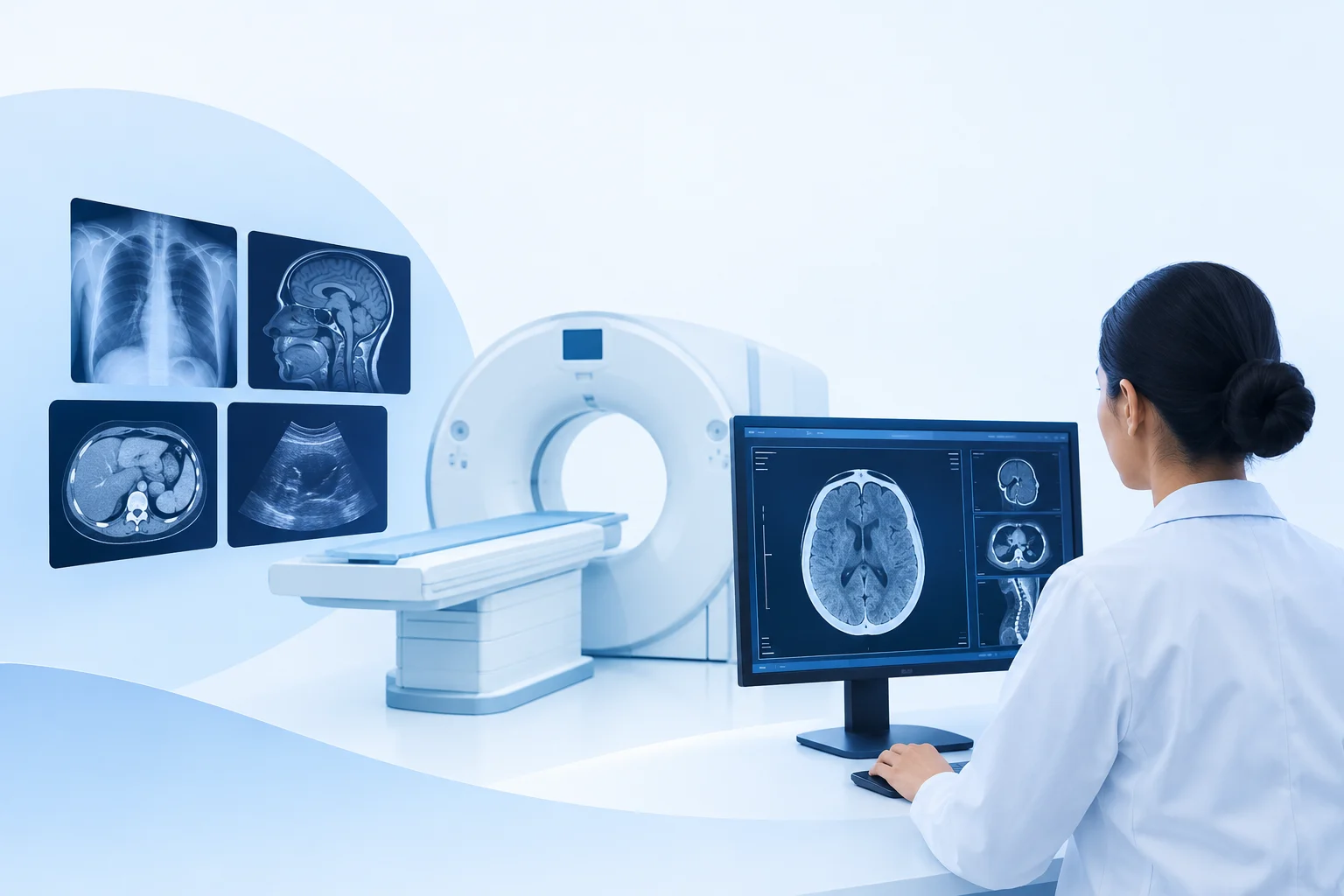
Every diagnosis begins with a clear picture. Behind each X-ray, CT scan, MRI and ultrasound report stands a trained radiology professional who captures the image, protects the patient from unnecessary radiation and ensures that the doctor receives something reliable to read. As hospitals and diagnostic centres across India expand their imaging services, the demand for such professionals continues to grow, and the Bachelor of Medical Radiology and Imaging Technology (BMRIT) has become one of the most sought-after paramedical degrees for science students.
If you are searching for a BMRIT course in West Bengal, Haldia Institute of Health Sciences (HIHS) offers a four-year, WBUHS-affiliated programme built around classroom learning, hands-on practice and a full year of internship. This guide explains the course structure, eligibility, admission route, syllabus and career scope, so that you can decide whether it is the right path for you.
What Is BMRIT? Understanding the Science Behind Medical Imaging
BMRIT is an undergraduate programme that trains students to operate imaging equipment, position patients correctly, process images and follow radiation safety protocols in a clinical setting. The course is also widely searched online as B.Sc. Radiology, and it covers the full range of diagnostic imaging, from conventional X-ray radiography to computed tomography (CT), magnetic resonance imaging (MRI) and ultrasonography (USG).
Radiology technologists are not doctors, yet their work shapes almost every major medical decision. A chest X-ray helps to confirm pneumonia, a CT scan can reveal internal bleeding within minutes, and an MRI shows soft tissues in remarkable detail. Each of these outcomes depends on a technologist who understands both the machine and the patient. BMRIT prepares students to be exactly that kind of professional: technically sound, careful and calm under pressure.
BMRIT Course Details at HIHS Haldia
Before applying, it helps to know the essential facts about the programme. The course details below are based on the official information published on the HIHS Haldia BMRIT course page.
Affiliation and Duration
The programme at HIHS is affiliated to the West Bengal University of Health Sciences (WBUHS), and it is conducted as per the guidelines of the National Commission for Allied and Healthcare Professions (NCAHP) under WBUHS. It runs for four years, and the final year is dedicated to an internship. This means students spend a significant part of the course working in a real healthcare environment rather than only in a classroom.
Eligibility Criteria
Candidates must have passed Higher Secondary (10+2) or an equivalent examination with at least 50% marks in Physics, Chemistry and Biology. Students from the science stream with a biology background are therefore the natural fit for this course.
Admission Process and Intake
Admission to the BMRIT course is through JENPAS-UG, conducted by the West Bengal Joint Entrance Examination Board (WBJEEB). The institute has an intake capacity of 20 seats, so aspirants should prepare early, follow the official WBJEEB notifications and complete the admission formalities on time.
Inside the BMRIT Syllabus: What You Will Learn
The syllabus moves steadily from basic medical sciences to advanced imaging technology. Based on the course outline shared by HIHS, the key areas are described below, and the complete curriculum follows the WBUHS framework, as per NCAHP guidelines.
Foundation in Human Sciences
Human Anatomy and Human Physiology form the starting point. Before positioning a patient for an X-ray of the knee or a scan of the abdomen, a technologist must know exactly what lies beneath the skin and how the body functions. These subjects give students the vocabulary and understanding to follow clinical instructions accurately.
Radiation Physics and Equipment
Physics of Radiation and Diagnostic Radiology explains how X-rays are produced and how they interact with the human body. Radiography Equipments, Maintenance and Quality Control then teaches students how imaging machines work, how to keep them calibrated and how to spot faults before they affect image quality or patient safety.
Imaging Techniques and Image Processing
Image Processing and Dark Room Techniques covers how raw exposures are turned into clear diagnostic images, while Radiography Positioning and Technique trains students to place patients correctly for different body parts and views. Contrast and Special Radiography Procedures introduces studies in which contrast agents are used to highlight organs, vessels or the digestive tract, and Radiographic Special Procedure and Patient Care focuses on guiding patients through those examinations with sensitivity.
Radiation Safety and Advanced Modalities
Radiobiology and Radiation Safety is among the most important subjects in the course, since it teaches how to protect patients, colleagues and yourself from unnecessary exposure. Equipment of Advanced Modalities and Modern Imaging Techniques and Recent Trends in Imaging then introduce the technologies that are reshaping diagnostics. Finally, Computer Application in Data Entry equips students to handle patient records and digital reports, which is an everyday requirement in modern imaging departments.
Skills You Will Develop During the Course
Beyond technical knowledge, BMRIT builds a set of practical and professional skills that employers value. Students learn to operate imaging equipment with precision, to position patients so that images are clear on the first attempt, and to follow safety protocols consistently. They also develop communication skills, because a nervous patient who understands what will happen during a scan is far easier to image than one who is anxious and confused.
Attention to detail, patience, teamwork with radiologists and nurses, and the ability to stay composed in emergencies are all strengthened during the internship year, where classroom learning meets real patient care.
Is BMRIT the Right Course for You?
BMRIT suits students who enjoy science, especially Physics and Biology, and who like the idea of working with technology in a healthcare setting. If you are curious about how machines can look inside the human body, comfortable working with patients, and happy to follow detailed safety procedures, this programme offers a clear career route. It is also a good option for students who wish to work in the healthcare sector but prefer a specialised technical role in a hospital or diagnostic setting over a clinical degree such as MBBS.
Career Scope After BMRIT: Where Can This Degree Take You?
Imaging is now a part of almost every medical specialty, from orthopaedics and cardiology to oncology and obstetrics. This gives BMRIT graduates a wide field to work in.
As imaging technology advances and more patients seek early and accurate diagnosis, well-trained technologists who keep pace with new equipment and techniques remain valuable across the healthcare sector. Continuous learning is therefore a natural part of a radiology career.
Jobs in Government and Private Hospitals
According to the course details published by HIHS, graduates are eligible to apply for posts such as X-ray Technician, CT Technician, USG Technician and MRI Technician at Central and State Government hospitals as well as private hospitals. Radiology departments run round the clock in most large hospitals, so the work offers exposure to a great variety of cases.
Diagnostic Centres and Nursing Homes
Standalone diagnostic centres and nursing homes also employ trained imaging technologists. Working in these settings often means handling a high volume of scans every day, which sharpens speed and accuracy and builds a strong practical foundation early in one’s career.
Starting Your Own Radiological Diagnostic Centre
For those with an entrepreneurial mindset, the course also opens the door to setting up an independent radiological diagnostic centre. This route requires experience, investment and compliance with the applicable regulations, but it allows a qualified technologist to build a business around a skill that communities will always need, especially in places where access to reliable imaging services can make a real difference to local patients.
Why Choose HIHS Haldia for BMRIT?
Haldia Institute of Health Sciences was established in 2003 by the Indian Centre for Advancement of Research and Education (ICARE), and it offers a wide range of paramedical programmes. Students comparing their options can also read why HIHS is regarded as one of the best paramedical colleges in West Bengal.
The BMRIT programme carries WBUHS affiliation, which gives the degree a recognised academic standing within the state. The four-year structure includes a full year of internship, so students graduate with practical experience rather than theory alone. With an intake of just 20 students, learning groups remain compact, which allows closer attention during practical sessions.
Frequently Asked Questions
What is the duration of the BMRIT course at HIHS Haldia?
The BMRIT course runs for four years, and this includes one year of internship.
What is the eligibility for BMRIT admission?
Candidates need to have passed Higher Secondary (10+2) or an equivalent examination with at least 50% marks in Physics, Chemistry and Biology.
How can I take admission to the BMRIT course?
Admission is through JENPAS-UG, conducted by the West Bengal Joint Entrance Examination Board (WBJEEB). The institute has an intake capacity of 20 seats.
Is BMRIT the same as B.Sc. Radiology?
BMRIT is the formal name of the programme offered at HIHS, and the course page is titled B.Sc. Radiology because students commonly search for it under that name. It is a bachelor’s-level programme in radiology and imaging technology, affiliated to WBUHS.
What jobs can I get after completing BMRIT?
Graduates can apply for X-ray, CT, USG and MRI Technician posts at Central and State Government hospitals, private hospitals, diagnostic centres and nursing homes. They can also set up their own radiological diagnostic centre.
Contact Us
If a career in medical imaging appeals to you, HIHS Haldia would be glad to guide you through the admission process. Reach out to institute at ICARE Complex, Hatiberia, Haldia, Pin 721657, Purba Medinipur, West Bengal, call on +91 9153294484, or write to principalhihs@gmail.com. You may also submit an admission enquiry online or explore more courses at hihshaldia.in. Since the intake is limited to 20 seats, an early enquiry is strongly advisable for students who wish to secure a place in the BMRIT course.

